결론 먼저
Neural integrator(NI) = 눈을 원하는 위치에 “유지(gaze holding)”시키는 뇌간–소뇌 회로
(속도 명령 → 공간적 위치 신호로 “적분(integrate)”하는 신경 계산 장치)
- Horizontal NI = MVN + NPH
- Vertical/Torsional NI = INC
- Flocculus/paraflocculus = NI의 안정성(fine tuning) 담당 → gaze-evoked nystagmus
- Nodulus/uvula = gravity orientation + velocity storage 조절 → positional nystagmus & PAN
NI 또는 이를 조절하는 소뇌·뇌간 회로가 고장나면
→ 중추안진(GEN, downbeat, PAN, central positional)이 생김.
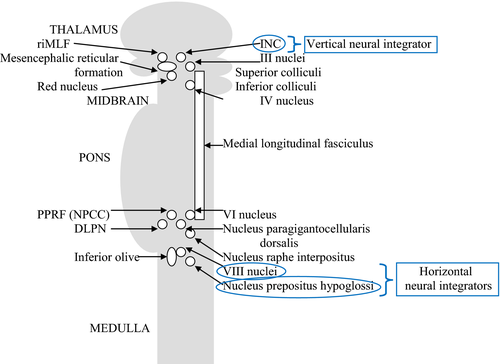
1) 먼저 기본 원리: Eye velocity → Eye position
뇌간은 “속도(velocity)” 신호만 만든다.
하지만 우리가 눈을 원하는 곳에 고정하려면 “위치(position)” 신호가 필요함.
- Velocity signal = “눈을 오른쪽으로 돌려라”
- Position signal = “오른쪽 끝에 계속 유지해라”
이 velocity → position 변환을 해주는 것이 Neural integrator(NI)
2) Neural integrator가 고장 나면 무슨 일이 생기나?
NI가 고장 → position signal이 불안정 → 눈이 고정 안 되고
gaze holding failure → gaze-evoked nystagmus (GEN)
예: 오른쪽을 보려고 하면 눈이 자꾸 원위치로 돌아가고(slow phase),
강제로 다시 오른쪽으로 튕기는(fast phase) 패턴.
→ 그래서 “cerebellum / pons 병변”에서 가장 흔한 central nystagmus가 바로 GEN.
3) Horizontal Neural Integrator = MVN + NPH
MVN (medial vestibular nucleus)
NPH (nucleus prepositus hypoglossi)
이 둘이 합쳐져서 horizontal gaze holding 담당.
이 부위는 CPA 주변 + AICA territory와 가까움.
그래서
- AICA stroke
- CPA tumor (acoustic schwannoma)
- pontomedullary junction 병변
→ horizontal gaze-evoked nystagmus 생김.
4) Vertical / Torsional Neural Integrator = INC
INC (Interstitial nucleus of Cajal) 은 midbrain에 위치.
이게 vertical + torsional gaze holding 담당.
INC 병변의 특징:
- vertical gaze-evoked nystagmus
- torsional nystagmus
- ocular tilt reaction 가능
즉, 수직/회선 방향 고정 문제는 대부분 midbrain/INC 문제.
5) Cerebellum = NI를 “미세조절(fine tuning)”
(1) Flocculus / Paraflocculus
주 역할 → Neural integrator를 안정화하고 drift를 억제
그러므로 flocculus 병변 →
- GEN (가장 대표적)
- Downbeat nystagmus
- Upbeat nystagmus
- pursuit deficit 등
해부 위치:
- 4th ventricle 바로 옆
- CN VIII root entry zone 아래쪽
그래서
- PICA/AICA infarction
- Chiari
- 4th ventricle tumor
등에서 central nystagmus가 흔하게 발생.
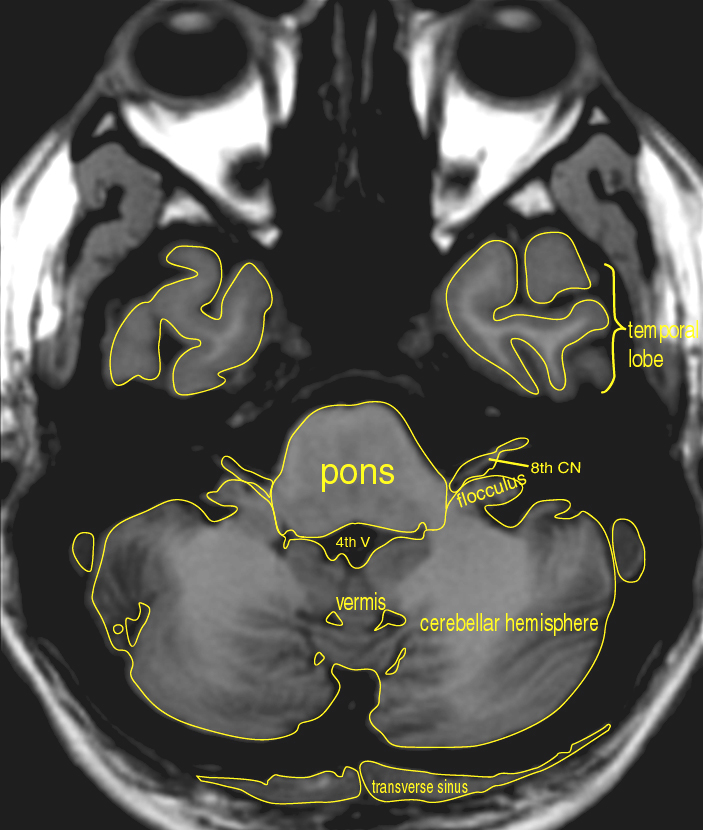
(2) Nodulus / Uvula
주 역할 → Gravity orientation + Velocity storage 조절
- Canal–otolith 통합
- 머리 roll/tilt 시 중력 방향에 맞게 canal 신호 재해석
- Velocity storage 억제 기능(PAN 방지)
따라서 nodulus/uvula 병변 →
(A) Positional nystagmus 문제
- Apogeotropic positional nystagmus
- Head-roll 시 방향이 바뀌지 않는 direction-fixed pattern
(“gravity reorientation”이 망가진 전형)
(B) Spontaneous nystagmus 문제
- Periodic Alternating Nystagmus (PAN)
(velocity storage 억제 상실 → 방향 교대)
즉:
Flocculus = gaze 안정 회로
Nodulus = 중력 및 지속 전정신호 회로와 관련
6) 전체 회로 흐름 요약
1) Brainstem premotor nuclei
- PPRF / riMLF = velocity signal 생성
2) Neural integrators
- Horizontal NI = MVN + NPH
- Vertical/Torsional NI = INC
3) Cerebellum
- Flocculus/paraflocculus
→ NI output 안정화(gaze holding) - Nodulus/uvula
→ gravity orientation + velocity storage control
4) Ocular motor neurons (CN III/IV/VI)
- 최종 position 출력을 extraocular muscles로 전달
- gaze 유지 & nystagmus 형태 결정
'의학공부' 카테고리의 다른 글
| GLP-1 agonist가 파킨슨병의 진행을 늦출 수 있을까? (0) | 2026.01.25 |
|---|---|
| Cluster Headache (군발두통) : 왜 편두통 약으로 치료가 될까? (0) | 2025.11.22 |
| 자율신경검사, 무엇을 왜 보는 것일까? (0) | 2025.11.22 |
| 신경 퇴행성 질환을 이해하는 가장 쉬운 방법: 단백질 병리(synuclein vs tau vs TDP-43) (0) | 2025.11.22 |
| SSRI, REM 수면, 그리고 RBD는 어떤 관계일까? (0) | 2025.11.19 |


댓글